CAMAG® TLC Scanner 4

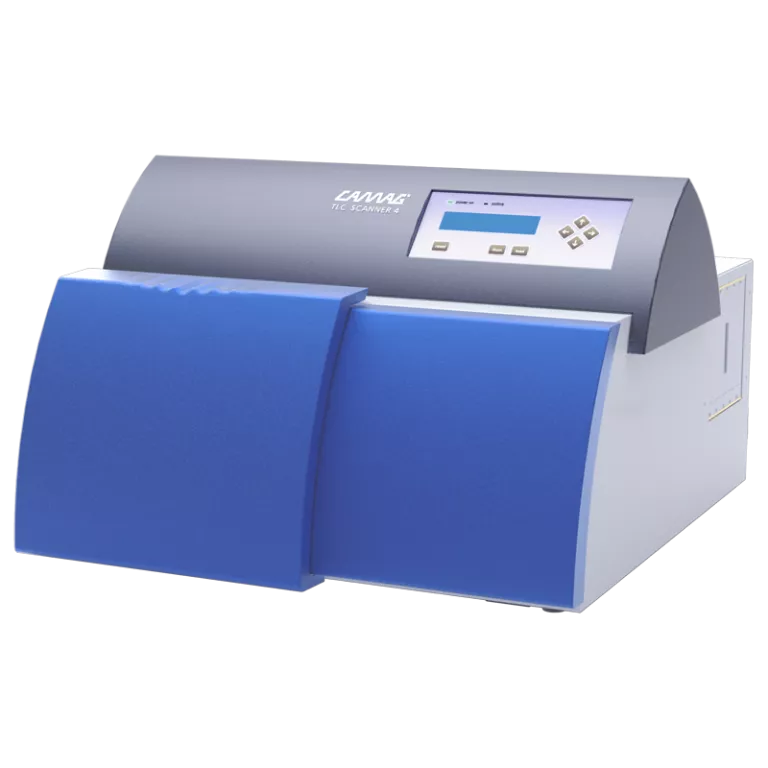
The TLC Scanner 4 is the most advanced workstation for densitometric evaluation of TLC/HPTLC chromatograms and other planar objects.
The TLC Scanner 4 is a scanning densitometer. It measures the reflection of separated compounds in absorption and/or fluorescence mode. Controlled by visionCATS software the TLC Scanner 4 enables quantitative evaluation of the generated densitometric data. The spectral range of light from 190 to 900 nm is available for selecting single or multiple wavelengths for scanning densitometry. Detection can thus be fine-tuned to match the spectral properties of the analyte to its optimized specificity and sensitivity of the detection.
Key Features
Technical Specifications
Link
- Measurement of reflection, either in absorbance and/or fluorescence
- Spectral range from 190 to 900 nm
- Data step resolution 25–200 μm
- Spectrum recording up to 100 nm/s
- Any plate format up to 20 x 20 cm
- Software-controlled by visionCATS
Evaluation with visionCATS
visionCATS controls the TLC Scanner 4 and enables quantitative evaluation of the generated densitometric data. To determine the substance concentration in a sample, five different quantification functions (e.g. linear and polynomial) are available. Several scanning steps (e.g. scanning the plate after development and scanning the same plate after derivatization) and up to five different evaluations can be performed (with data obtained from single wavelength, multiple wavelengths or a combination of measurements in absorption and fluorescence detection mode).
The Scanner Ultimate Package:
- Multi Wavelength Scan: this feature offers the possibility to perform a multi-wavelength scan with up to 31 selected wavelengths or a combination of measurements in absorption and fluorescence detection mode.
- Scanner Quantification: this feature allows to quantify each individual substance on the plate. Five different quantification functions are available for evaluation to determine the concentration of the substance in a sample. In one analysis file up to five evaluation steps can be performed in multiple plate states (e.g. plate after development and same plate after derivatization).
- Spectrum Scan: this feature includes the measurement of the spectrum of each individual substance on the plate including the evaluation of the substance purity by comparison with reference standard.
Light sources:
- Deuterium lamp, usable continuum 190 – 450 nm
- Halogen-tungsten lamp, usable continuum 350 – 900 nm
- High-pressure mercury lamp, spectral lines (248, 254, 265, 280, 297, 302, 313, 366, 405, 436, 546, 577, 579 nm)
The lamp, which is positioned in the light path, is automatically ignited. All lamps are current stabilized.
Pilot lamp and compartment illumination:
The slit is automatically illuminated with visible light when the compartment illumination is switched on. The scanning compartment is illuminated with a 4 W tube emitting UV 254 nm which the user can replace by a UV 366 nm or a white light tube.
Monochromator: Concave holographic grating, 1200 lines/mm, bandwidth selectable 5 or 20 nm, wavelength range 190–900 nm; monochromator driven by step motor, reproducibility of wavelength setting better than 0.2 nm, accuracy better than 1 nm; connector for flushing with nitrogen.
Maximum speed of spectra recording 100 nm/s.
Secondary filter: Motor-driven filter wheel with three automatically selected filters for the elimination of second order wavelengths; 400 nm cut-off filter for fluorescence measurements; three positions for user selected filters.
Scanning slit: Revolving disk with 20 fixed apertures; length of slit images selectable between 0.2 and 12 mm, width between 0.1 and 1.2 mm in 42 combinations
Detector: Two matched broadband photo multipliers, multi alkali type, spectral sensitivity 185 – 900 nm
Stage drive: Independent in both directions by step motors, micro step driven for smooth movement; reproducibility of positioning better than 50 μm in Y-direction, better than 100 μm in X-direction; maximum scanning speed 100 mm/s
Power connection: 115 V and 230 V selectable; 50/60 Hz; maximum energy use 180 W (tungsten and mercury lamp ignited)
A/D converter: 16 bit, 2-channel A/D converter, 100 ms per double conversion
Connections: RS-232 serial port
Dimensions (W x D x H): 590 x 650 x 367 mm
Weight: 39 kg
For more infromation visit camag tlc scanner 4
Povezani proizvodi
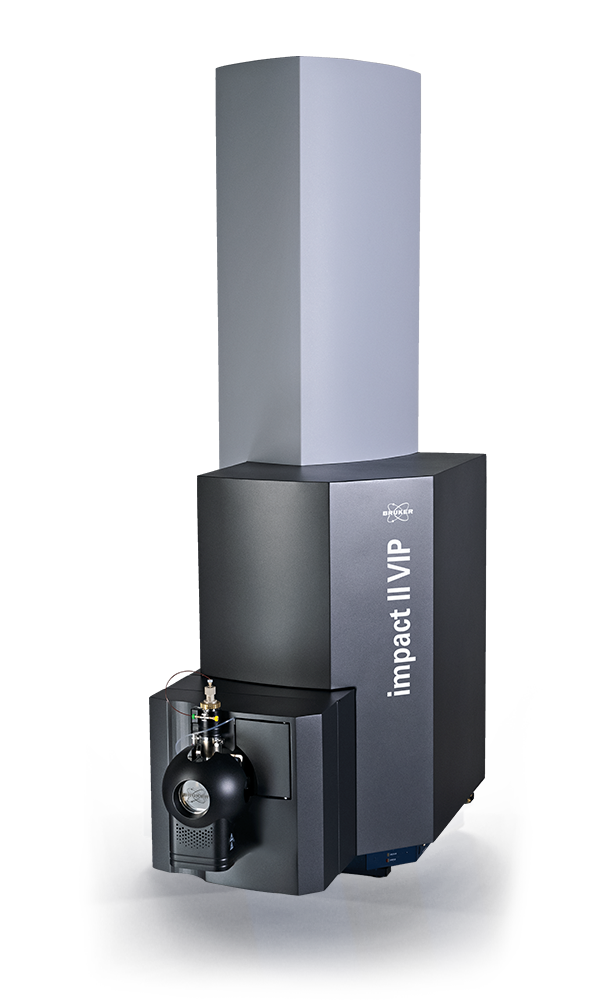
TargetScreener HR
TargetScreener HR is a powerful solution based upon accurate mass analysis with Bruker QTOF systems and highly curated databases (over…
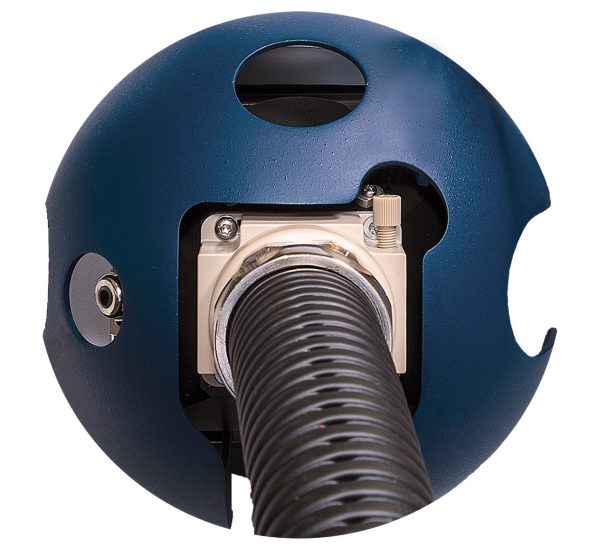
GC-APCI II
Todays analytical chemistry often presents complex mixtures of compounds which are not available in libraries and data bases. Identification of…
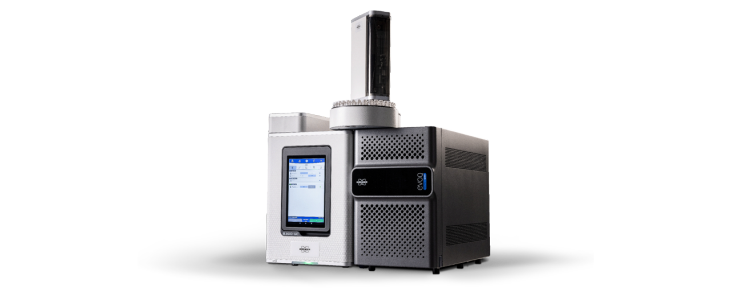
EVOQ® GC-TQ
The EVOQ® Triple Quadrupole Together with Gas Chromatography (GC-TQ) is a comprehensive solution for the most demanding gas chromatography applications.…